
Project & Dispute Analytics
When a project goes sideways, the record is the case.
On a complex residential build, the truth of what happened lives in the documents — spread across builder software, change orders, pay applications, vendor invoices, receipts, emails, and PDFs. The information exists. It just isn’t reachable. I build the system that makes it reachable.
An owner-side data environment for homeowners, construction attorneys, and consultants who need to understand, organize, and prove what a complex project record actually shows.
The Problem
The data exists. It just isn’t usable.
The builder’s platform — Buildertrend, Procore, CoConstruct, and the like — shows the builder’s slice of the job, one document at a time, with no clean way to pull the whole record out. It was never designed to give an owner the visibility to see how money flowed, what backup exists, or how field events line up against the schedule.
Meanwhile the rest of the record is everywhere else: owner-paid expenses in bank and card statements, decisions buried in email threads, drawings and revisions scattered across folders, costs that never reconcile against draws. For an attorney or consultant facing tens of thousands of pages, answering a single question can mean opening hundreds of files by hand.
The problem is rarely missing information. It’s information that nobody can work from the same version of.
What Gets Built
A workspace built around your record.
I pull the project data into a secure, structured environment where documents stop being disconnected files and become records you can search, filter, link, and review — each one connected to the costs, issues, timeline events, and source documents around it.
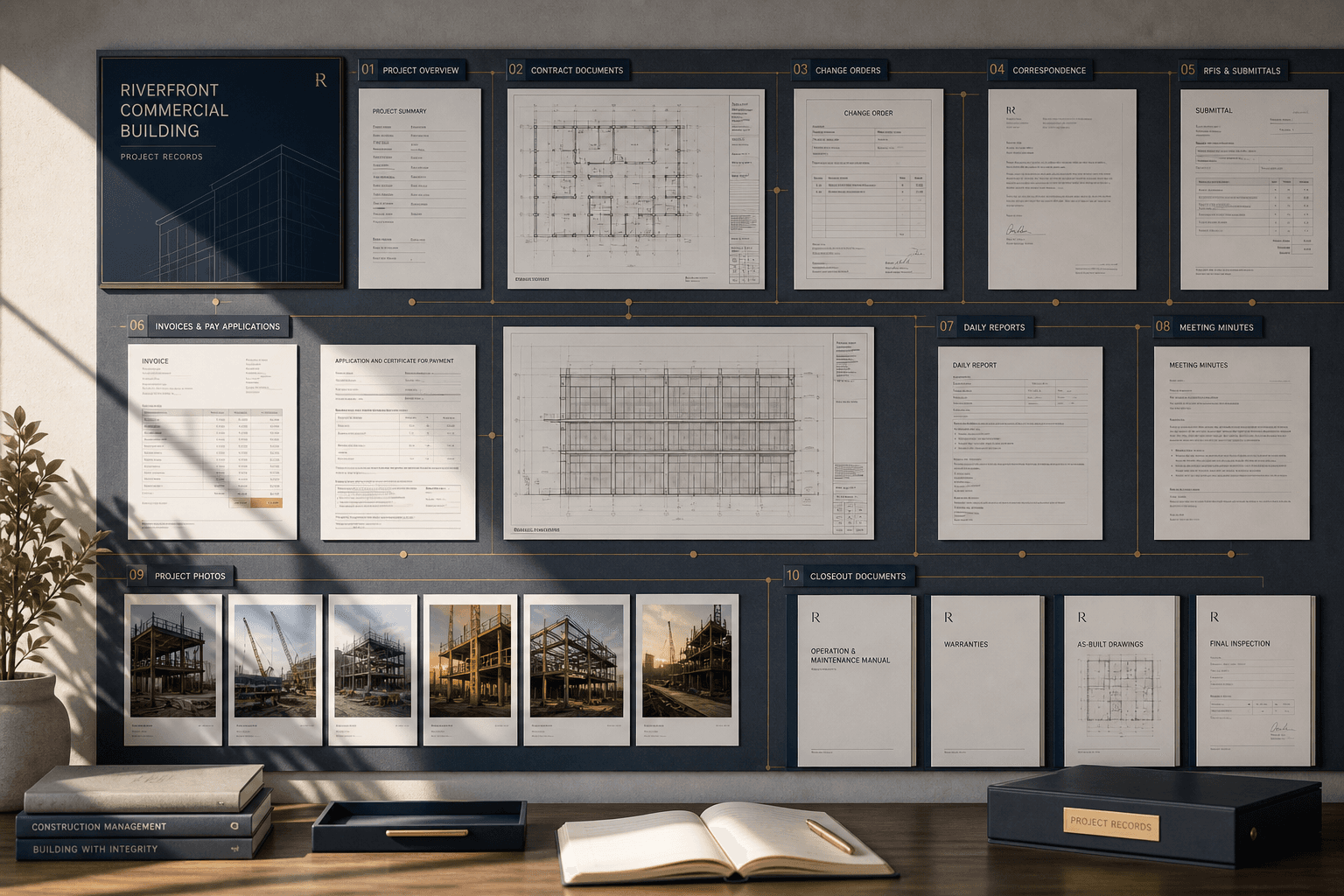
An owner-side data layer
Builder exports, change orders, pay applications, vendor invoices, receipts, job logs, schedules, drawings, and emails pulled into one structured system you control — independent of the builder’s project-management software.
Every number traces to its document
Costs are modeled down to the line item, and each figure links back to the invoice, receipt, or change order behind it. Even scanned, image-only invoices are read by vision and turned into searchable scope.
A budget the builder doesn’t control
Owner-paid expenses — mitigation work, direct purchases, consultants, design fees, shifted scope — captured alongside the builder’s record so the true cost of the project is visible in one place for the first time.
Timeline and job-log overlays
Builder phases, daily job logs, change-order activity, and issue events on one horizontal view — so gaps in the contemporaneous record line up against the timing of known problems.
Ask the entire record a question
Pose a plain-language question — who first raised a concern, when a decision was made, whether an issue surfaced before work proceeded — and get an answer back with the source citations behind it.
Issue buckets that hold the matter together
Defect categories, scope disputes, owner-paid items, and incomplete work organized into buckets that keep costs, documents, timeline events, and discussion connected instead of scattered.
Who It’s For
Built for the people who have to prove it.
Owners
You have the data — exports, invoices, statements, emails — but it’s trapped in too many places to be useful. This makes your own record legible, so you understand how money actually moved through your project.
Construction attorneys
A cleaner review surface than hundreds of loose PDFs. Findings move from candidate to accepted only when a person signs off, and related items export as an attorney-ready packet with every figure still linked to its source.
Consultants & experts
A place to organize the record, connect source documents, surface patterns, and track what still needs review — with row-level access so each stakeholder sees only what they should.
The software organizes. People decide.
AI-assisted workflows help ingest records, classify documents, and surface patterns that would be impractical to find by hand. They propose; they do not decide. A suggested finding enters the system as a candidate and only becomes a claim figure when a person signs off on it.
A verification spine, not a black box.
Raw record, candidate finding, verified item, and attorney-ready material are kept separate by the workflow. Every answer traces back to the document behind it, so the work product reflects human judgment — not a machine’s assertion.
Two decades in construction and a Georgia general contractor’s license behind the field read; a working knowledge of the data systems behind the build. This service grew out of a real engagement — see the underlying platform in the Construction Dispute Workspace case study.
How It Works
Scoped to the matter.
Intake
We pull in the record — builder exports, invoices, statements, emails, drawings, and logs — and confirm what story the data needs to tell.
Structuring
Documents become connected records: costs modeled to the line item, source files attached, issue buckets defined to fit the matter.
Review environment
You, your attorney, and your consultant get secure logins to a searchable workspace with timeline, budget, and source-linked review.
Attorney-ready output
Verified findings group into a coherent narrative and export as a packet — each item carrying its status and its links back to source.
Scope and pricing are tailored to each matter.
Have a version of this problem?
Let's map the record before deciding what to build.